
Build your Library.
Practice Philosophy.
Gain Wisdom.
Practice philosophy as a way of life with Becoming Human on-demand audio courses. Each course has its own easy-to-navigate page where you can see all the episodes and start listening right away.
Every course you purchase is added to your personal audio library. Use the login created with your first course purchase (or prior Becoming Human membership purchase) to build a personalized streamable collection of knowledge that you can listen to anytime, anywhere.
Live Teaching, Sundays
3.30 - 5.30 EST
+ On-Demand Audio
COURSE CATELOGUE
Click on any title and jump down the page to a specific course or scroll and browse the course order below.
*Included with a Becoming Human Project Membership
*The World, the Soul, & the Gods
*Plato’s Allegory of The Cave: Introduction to Epistemology
*Plato’s Symposium: Eros, Science, & Immortality
*Philosophy as a Way of Life: Ancient Wisdom for the Modern World
The Mystery of Existence: A New Interpretation of Martin Heidegger's Sein und Zeit
The Existential Enlightenment:
An Introduction to Søren Kierkegaard
The Modern Crisis of Choice & How to Find Personal Freedom
We Are Earth's Children: A Philosophy of Food and Life’s Interdependence
Ⓒ All courses are copyrighted and and may not be reproduced or used without permission.
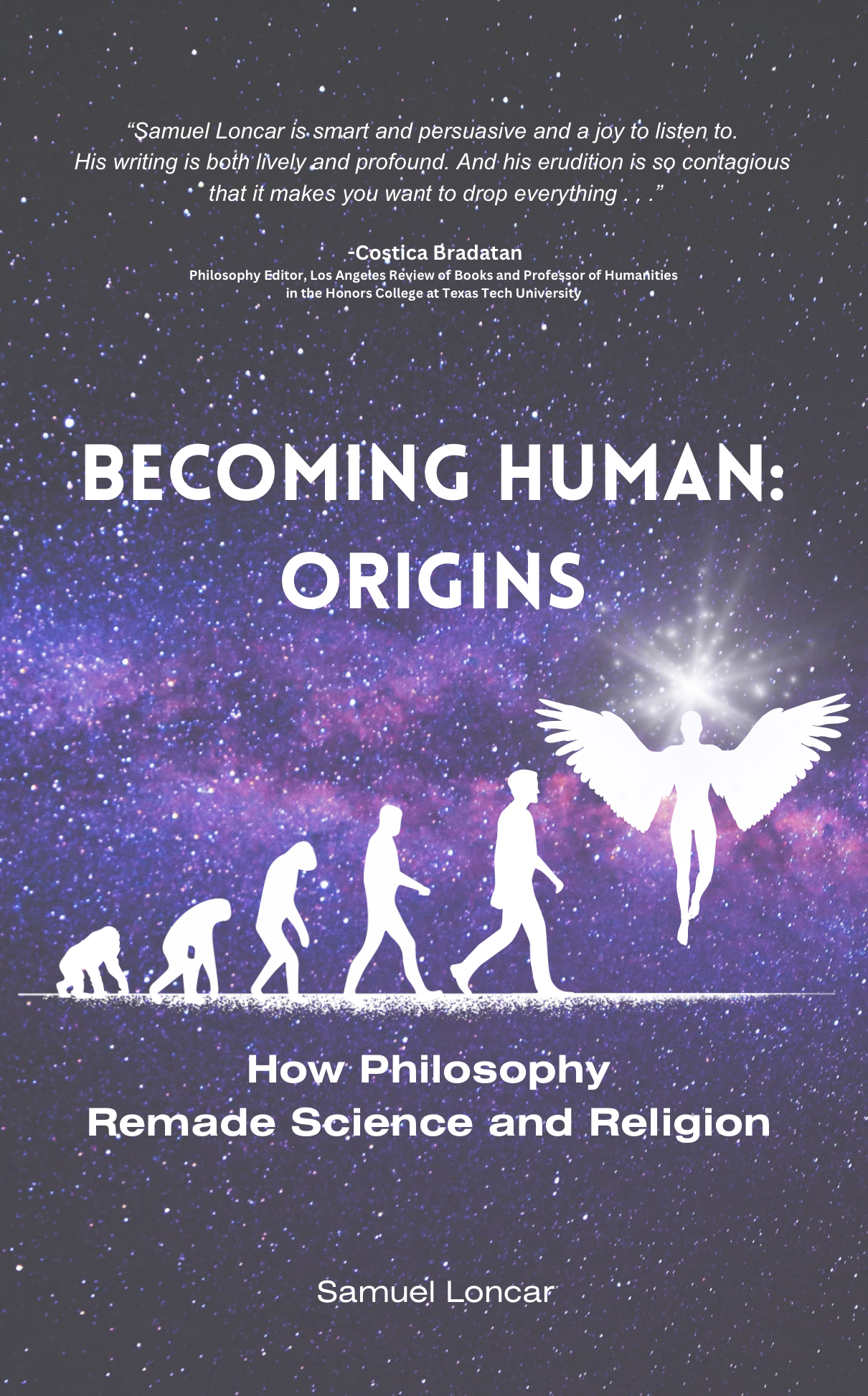
Becoming Human: Origins
You’ve been sold a story. The story says that science rescued modern people from superstition and religion.
This is the dominant narrative of science and religion that has been taught as settled fact. But it’s not the true story.
Drawing on a decade of original research at Yale, this 10-episode (10-hour) series, offers philosopher Samuel Loncar’s groundbreaking interpretation of the hidden history uniting philosophy, science, and religion.
Beginning with Socrates as a revolutionary martyr and culminating in the death of God and Reason, this series exposes the hidden common ancestry uniting categories like Protestant Christianity, the Enlightenment, Marxism, and modern Science.
These movements appear distinct and radically opposed, but they are not. They are merely different moments in a single narrative that has never been fully told: the true history of world philosophy. That story begins with the gods.
Becoming Human: Origins historicizes the modern secular narrative that dismisses traditional and indigenous ways as ignonant superstitious, and presents philosophy, science, and diverse living traditions as interconnected within the story of the human quest for knowledge.
Becoming Human: Origins finally explains:
Why Silicon Valley is full of gods
Why scientism poses a serious threat to modern science
Why we have entered the post-human age
Why atheists are deeply religious
Why secular philosophy is a modern myth
Why indigenous ways of life are not superstitious
Why antisemitism endures as the shared belief among totally opposed political and social groups
Why we face a profound crisis around what does it mean to be human and what we can practically do about it
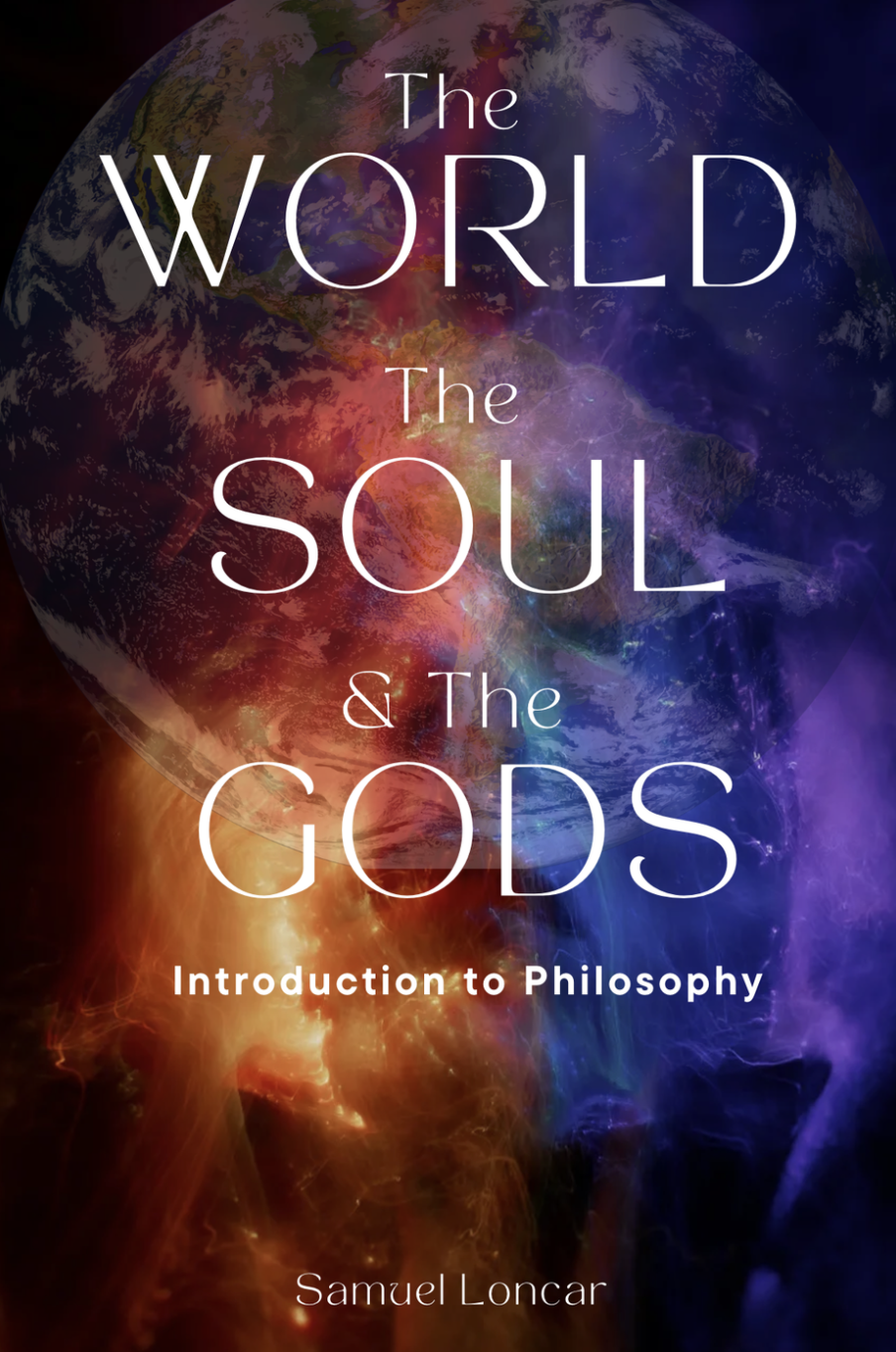
The World, the Soul, & the Gods
This is a rich and concise introduction to the world (cosmology), the soul (philosophical psychology), and the gods (theology).
The series gives a clear overview of the history of our idea of the world, our concept of life and how it evolved from the idea of the soul in antiquity into the modern self, and of the gods as crucial aspects of human psychology, history, and myth.
It explores how the soul is part of a cosmology we have largely forgotten, a world where humans were connected to the earth, Gaia, as a living intelligence. Our conception of the universe shapes how we think about and care for the Earth and other humans, and this forgotten cosmology has profound wisdom for our ecological crisis.
The course as a whole provides a scientifically informed and mythologically sensitive vision of the Life in its individual, earthly, and cosmic dimensions. | 3 episodes, between 30-45 minutes each.
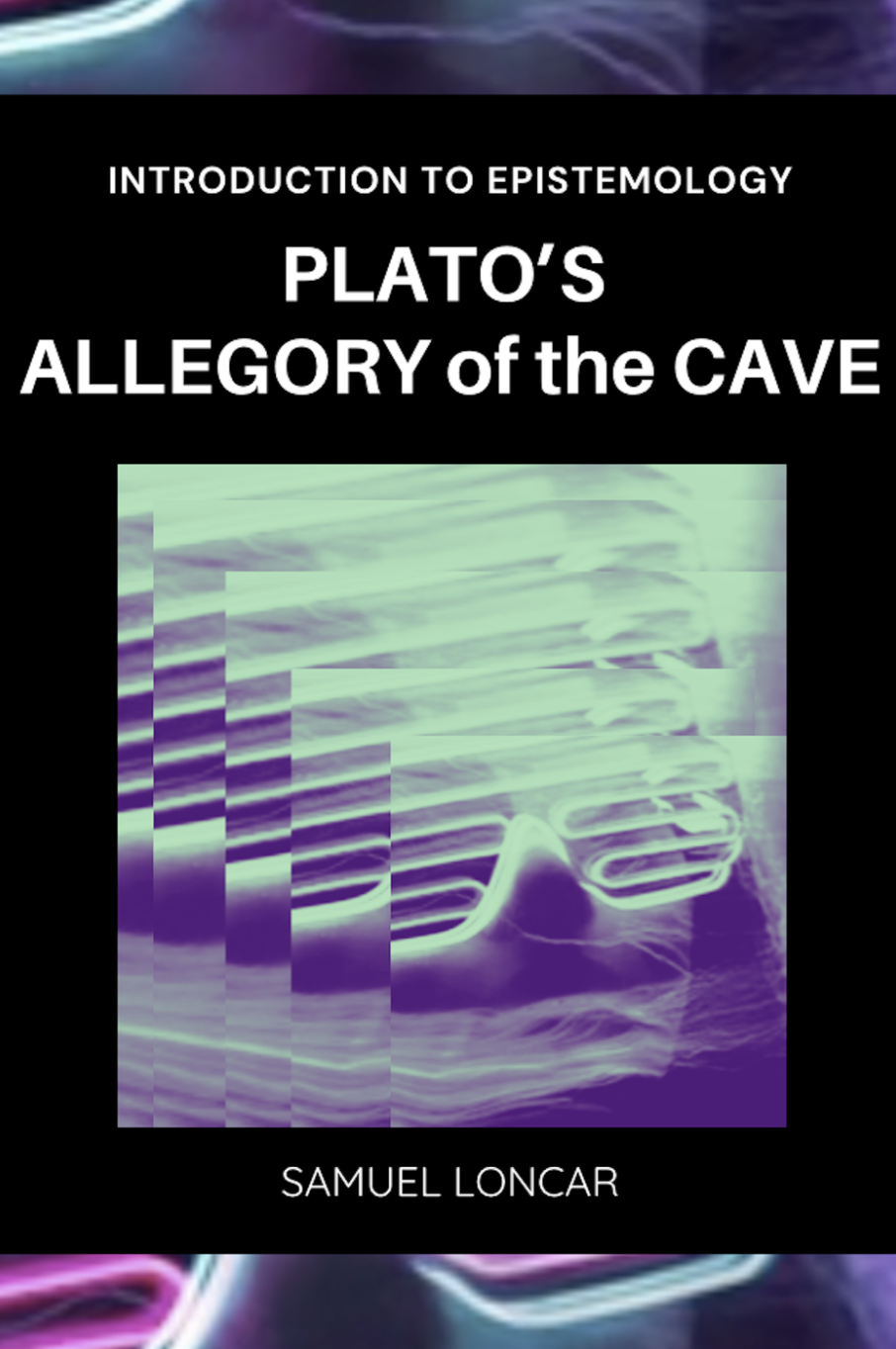
Plato’s Allegory of The Cave: Introduction to Epistemology
Plato’s "Allegory of The Cave" is the most famous story in Western philosophy. This 3-lecture course shows how Plato’s allegory gives us insight into how the world is an illusion, how it is real, and how to know the difference.
Developing a critical social epistemology, the course connects Plato's teaching to modern marketing, psychological operations, conspiracy theories, and mass deception.
It offers a concise introduction to Plato’s metaphysics and epistemology, while revealing the essential spiritual dimension of philosophy as a practice of liberation, presenting the essentials of Loncar's approach to epistemology as a form of applied philosophy.
This course is a prerequisite for the forthcoming live course “Psy Ops: Psychological Warfare as a Global Epistemic Regime.” | 3 episodes, between 50-70 minutes each.
Plato’s Symposium: Eros, Science, & Magic
Science, magic, and immortality all lead back to the same ancient god: Eros.
The history of revolutionary advances in humanity, the Holy Grail, and Ray Kurtweil's Singularity can all be traced back to a single myth, the Myth of Diotima, found in Plato's “Symposium”—the most literarily intricate of all Plato's dialogues.
Diotima, the mysterious wise woman from Mantinea, reveals to Socrates the secret of immortality. Central to that ancient mystery is Eros (Love).
This three episode series on the Symposium and the Myth of Diotima explores Socrates' integrated vision of Eros that unifies the sensuality of the bedroom, the most rarified delights of mathematical epiphany, and the experience of mystical enlightenment.” | 3 episodes, between 50-70 minutes each
The Mystery of Existence: A New Interpretation of Martin Heidegger's Sein und Zeit
"I'm a philosopher who has been studying Heidegger for 30 years, and your 12-lecture course has literally transformed my understanding of Sein und Zeit. This course is invaluable. Thank you so much."
— Professor Aliman Sears
Haunted by Hamlet’s question, “To be or not to be,” humans wander the world oblivious to the meaning of their own existence. A century ago, in a period of global turmoil, crisis, and despair, Martin Heidegger published a revolutionary response to the question, what does it mean to be, creating the foundations of Existentialism and reshaping philosophy, atheism, and religion across the world. His book, Sein und Zeit, was first translated into English in 1962 as Being and Time.
Based on a decade of research at Yale University by the philosopher Samuel Loncar, Ph.D., this original interpretation of Sein und Zeit, using only the German text and his own translations, reveals for the first time that Heidegger’s work has been mistranslated and therefore misunderstood as Being and Time.
Heidegger’s essential idea of what it means to be was obscured by his own fraught employment of ideas from the history of theology, the immense intellectual challenge of explaining Heidegger’s ideas, whose origins he sought to conceal, and the difficulty of rendering them in English. From Being to Time to Existence and Time: An Interpretation of Sein und Zeit presents a fundamental reevaluation of Heidegger’s major work by returning to the original German and integrating the hidden frameworks that shaped Heidegger.
Drawing on recent scholarship and his own work in the history of philosophy, science, and religion, Loncar provides a clear analysis of the central ideas of the book, giving any engaged listener the tools to understand the text for themselves and gain deeper insight into their own existence.
At the heart of his argument is his solution to the book’s central, but rarely discussed, mystery: Why did Martin Heidegger define the human being in the same terms Thomas Aquinas used to describe God?
In the end, we are led to a new vision of Heidegger, philosophy, theology, atheism, and our own existence.
Episodes
Part One: The Origins of Dasein and Existenz
Lecture 1: The Narrative Logic of Existence and Time
Lecture 2: Kierkegaard and the Origin of Dasein
Lecture 3: Journey to Existenz: Part 1
Lecture 4: Existence and Essence. Journey to Existenz: Part 2
Part Two: Existential Freedom: Authenticity and Temporality
Lecture 5: From Kant to Heidegger: Autonomy and Normativity
Lecture 6: Time as the Horizon of the Question of Sein
Lecture 7: Tradition and Concealment: The Destruction of the History of Ontology
Lecture 8: Consolidating the Silent Revolution: Heidegger and the Reparative Destruction of Ontology
Part Three: From the Afar to the Afar: Dasein, the World, and the Call of Conscience
Lecture 9: The Task of Existence and the Uniqueness of Dasein
Lecture 10: The Corrupted Root and the Lost World: The Fall of Dasein
Lecture 11: From the Afar: Guilt, Dread, and the Call of Conscience
Lecture 12: The Divine Mystery of Dasein and the End of Philosophy
The Existential Enlightenment: An Introduction to Søren Kierkegaard
From the rationalism of the Enlightenment to the dark freedom of Existentialism, there is a hidden path, passing through the abyss of human depravity into a new, scientifically rigorous psychology of the human self.
Often attacked or celebrated for his supposed irrationalism and attack on the Enlightenment, Kierkegaard is in fact the truest inheritor of the Enlightenment’s core values, for he shows how a commitment to rigorous rationality and human progress must confront the paradoxical essence of human existence.
The struggle of Enlightenment humanism to face the problem of evil, particularly after the Lisbon Earthquake, led to the immense yet unstable achievements of Immanuel Kant, who recognized a defect in human’s relationship to their own rationality. Seeking to uphold the sovereignty of Reason while preserving the insights of religion and morality, the contested inheritance of the Kantian legacy gave birth to German Idealism.
Situating Kierkegaard in the context of the Enlightenment, German Idealism, and the abyssal anthropology of Martin Luther, this course offers a detailed historical and philosophical introduction to Kierkegaard’s core ideas. Combining historical rigor with a strong focus on the existential and contemporary relevance of Kierkegaard, it is an ideal introduction for new and experienced students of Kierkegaard. The Existential Enlightenment offers insight into the meaning of history, the fate of religion, and the role of despair in human liberation, showing how the project of Existentialism and the Enlightenment meet in the path of Søren Kierkegaard.
Episodes
Part I: Kierkegaard’s Context
1. The Enlightenment as a Civilizational Crisis
2. Christianity and Enlightenment
3. The Second Immanuel: Kant and German Idealism
4. The Shadows of the Cross: Luther’s Existential Influence on Kierkegaard
Part II: Leaping over Lessing’s Ditch: The Struggle for Historical Meaning
5. History and Existence: Lessing’s Ditch
6. The End of Miracles? Truths of Reason and Facts of History
7. Johannes Climacus and the Absolute Paradox
8. The Moment and the Eternal
Part III: The Self: Psychology and Transformation in The Sickness Unto Death
9. Point of No Return
10. The Unconscious Sickness
11. The Self as a Synthesis
12. Despair and Freedom: The Establishing Power of Existence
The Modern Crisis of Choice & How to Find Personal Freedom
What does it mean to be modern? It means you have to choose everything. We are afflicted by our multiplicity of choice. Yet rather than liberating us, this abundance often leaves us anxious and uncertain.
Choices are stressful because choice is not freedom. Yet their subtle difference eludes us, leaving us stressed and confused. So how can we tell the difference between a true choice and a false one?
In this 3-lecture series, Yale-trained philosopher Samuel Loncar shares his understanding of the philosophical problem of freedom and offers you transformative and practical insights—drawing on Aristotle, the Tao Te Ching, and Kierkegaard—that will help you move from false choice to personal freedom.
The course will help you learn how to practice philosophy as a way of life and teach you how to identify true choices so that you can live a meaningful life, energized and empowered, tapped into your personal freedom.
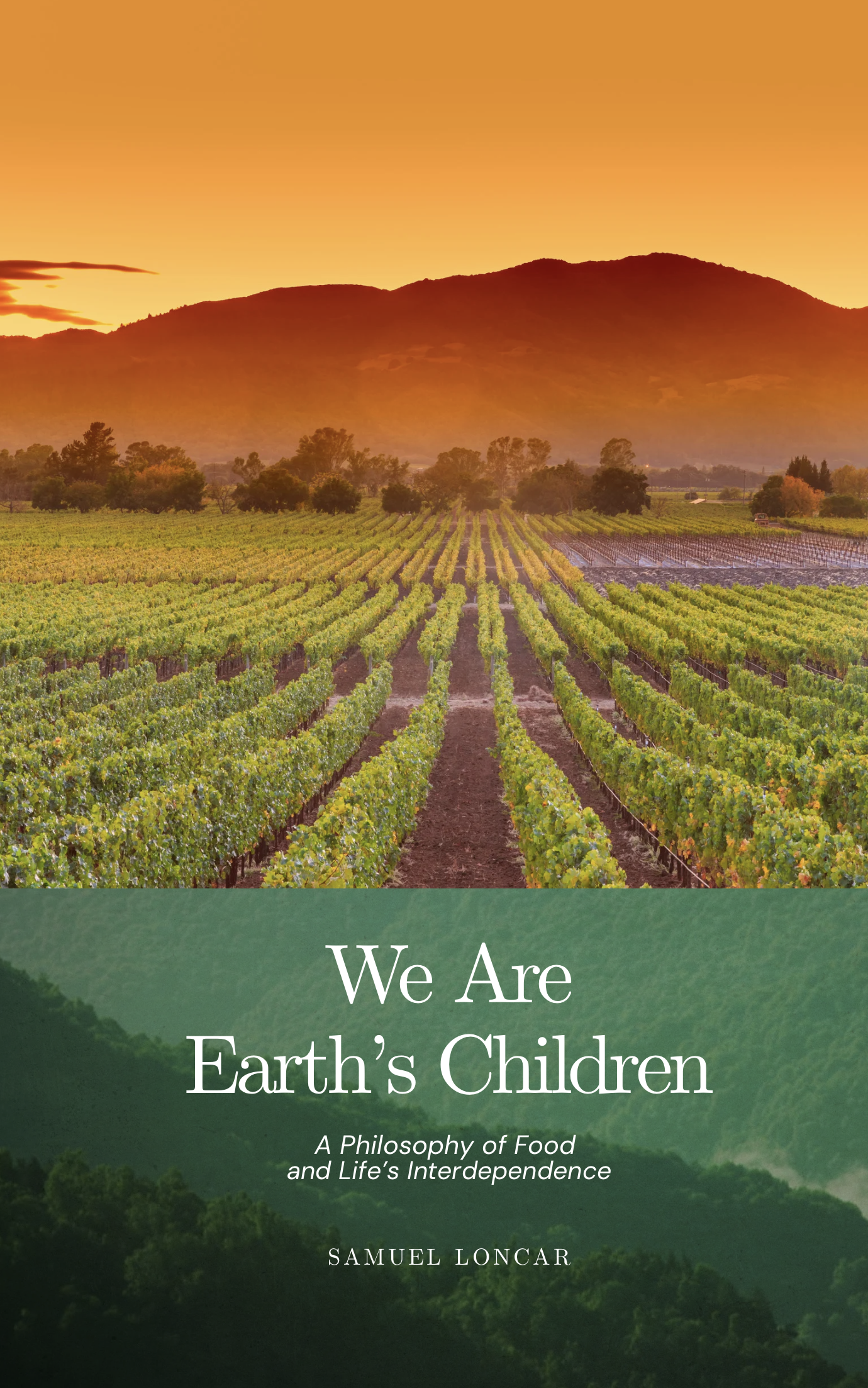
We Are Earth's Children: A Philosophy of Food and Life’s Interdependence
“The world begins at a kitchen table,” writes Muscogee (Creek) poet Joy Harjo, “no matter what, we must eat to live.” Eating is more than nourishment; it is a shared act that links every living being in the cycle of life on Earth.
This course reveals how our meals reflect the intimate relationship between the land and the flourishing of all creatures. As children of the Earth, we hold both the privilege and responsibility to care for the home that sustains us.
Inspired by a live Q and A, this course explores in three episodes the power of the everyday act of eating to reveal and transform the meaning of life. You will learn how eating a meal is a source of ethical insight, why eating and ecology are intimately linked, and how a philosophy of food as communion with all living beings can deepen your understanding and joy.